Call Us: +86-29-89820090Email: sales@hysolidcontrol.com

Mud Cleaning System

What Is Mud Cleaning System


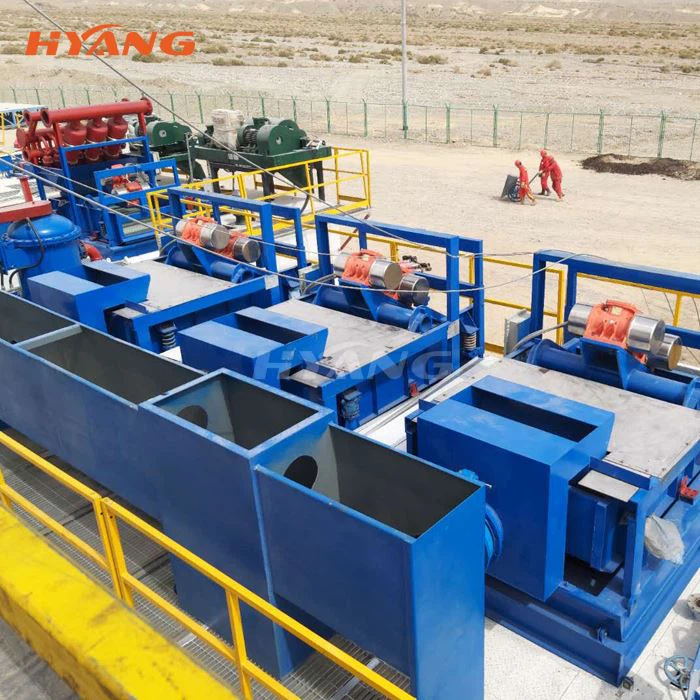
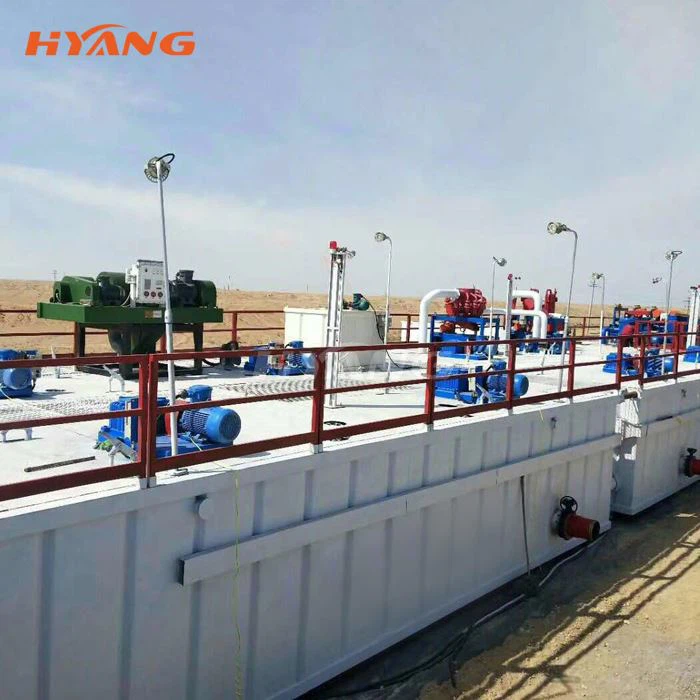
The mud cleaning system is an important part of the drilling rig. The mud cleaning system includes: shale shaker, sand removal and mud removal integrated machine, drilling fluid centrifuge, agitator, mud tank, jet mixing, sand pump, electric control, liquid-gas separation and other components. The mud cleaning system plays the role of purifying mud in the drilling rig. The mud cleaning system can generate mud suitable for drilling. It mainly filters the particles in the mud through the first-level classification of solid control equipment such as shale shakers to improve the performance of the mud. Meet the drilling requirements. The mud cleaning system is designed for different drilling conditions. Some drilling areas, need a mud cleaning system that can withstand the cold.


Advantages of Mud Cleaning System


Operational efficiency
The mud cleaning system ensures the continuous removal of drill cuttings from the wellbore, preventing blockages and allowing uninterrupted drilling. By cooling and lubricating the drill bit, the system reduces wear and tear on equipment, leading to longer bit life and fewer interruptions. The ability to adjust the properties of the drilling mud, such as viscosity and density, ensures that the mud meets the specific requirements of the drilling operation, enhancing overall performance.


Safety
Properly managed drilling mud balances the pressure within the wellbore, preventing blowouts and uncontrolled fluid flows that could pose serious safety hazards. The drilling mud stabilizes the wellbore walls, preventing collapse and ensuring the structural integrity of the well, which is crucial for the safety of the operation.Degassers and mud gas separators remove hazardous gases from the drilling mud, reducing the risk of dangerous gas build-ups and explosions.


Environmental protection
Effective management of drilling fluids and cuttings reduces the environmental footprint of drilling operations. Proper disposal and recycling practices are integral to minimizing pollution. The formation of a filter cake on the wellbore walls by the drilling mud helps control fluid loss into the formation, protecting subsurface environments from contamination. Reclaiming and reusing drilling mud components, such as barite, not only reduces costs but also minimizes waste generation, contributing to more sustainable drilling practices.


Economic efficiency
Efficient solids control and fluid management reduce the costs associated with drilling fluid consumption and waste disposal.By preventing issues such as wellbore collapse and equipment wear, the mud cleaning system minimizes downtime, leading to significant cost savings over the course of a drilling project.


Why Choose Us
 
1.Experienced team

HYANG has an outstanding team of 30 R&D personnel, 18 management staff, 20 domestic and overseas marketing specialists plus 15 after-sales services, together with advanced equipment, strong technology, excellent product design, and research ability.

2.Our product

HYANG mainly works for various solids control equipment and accessories, solids control system, Oil sludge treatment, vacuum absorption environmental toilet, and also mud recycling system used in HDD, TMB, CBM, and boring pipe. And oilfield equipment, energy-saving, and environmental protection products like drilling rig equipment, drilling rig accessories, wellhead devices, high-presifoldsure men, well completion/testing tools.

3.Quality control

Our products comply with API standards and have passed the ISO9001 quality management system. They have been adopted by major oil fields in domestic and overseas.

4.Our service

HYANG always persists in the business philosophy of customer-focused service ideas to satisfy customer needs, providing integrity and efficient package solutions for worldwide industrial manufacturers and also timely, transparent, and veritable procurement experience for customers.


Precautions for Using Mud Cleaning System
 

Guards should be properly installed at all times. Guards on mud pump couplers should be in place before pumps are put into operation. Shaker belt and counter weight guards should be in place at all times. Workers should be aware of the type of drilling mud system in use and review the sheets for the chemical additives in the drilling mud system. Wear appropriate personal protective equipment for the type of mud and repair or maintenance service that is being conducted on the equipment.


The electrical system components rated for the classification of the area should be properly installed. Be sure all bolts are in place in the covers of the electric switch and junction boxes. Check to ensure that electric cords are properly inserted into the box and sealed. Electrical cords should be in good condition and protected from damage. Workers should know which breaker(s) in the control house operate the various components of the mud cleaning system. Do not attempt to work on equipment while it is in operation. Turn off the power at the control house and turn off the switch at the site.


Use lockout/tagout procedures. When machines are running, stay clear of vibrators. When working on a desilter or desander cone, shut power off and lockout and tagout the control. Take care to prevent mud from spraying into your eyes. Working platform: Have good footing around equipment. Depending on the location of the equipment to be worked on, it may be necessary to have guardrails or other fall prevention system in place. Mud tank walkways should be properly installed so that the crew members can walk on them without slipping or falling. Keep hoses, tools, etc., picked up and off the walking surface. Mud lines, valves and connections should be checked for internal wear periodically and replaced as necessary. If jet type of system is used to clean pits, the driller must remain at the mud pump controls at all times while the jetting is ongoing. All high pressure hoses should have safety snub lines and be properly hobbled.


Components of a Mud Cleaning System
Triple Deck Shale Shaker
Mud Tank System
Solid Control Equipment
Drilling Mud System

Shakers
There are three main types of shaker motion available. Linear, orbital and elliptical Linear motion shakers utilize a pair of eccentrically weighted, counter rotating vibrating motors. To date the linear motion shaker design is far superior, as it allows for a positive deck angle, which is the angle of adjustment of the shaker deck. Linear motion allows screened solids to travel uphill to the discharge end of the shaker bed. This allows you to keep liquids on the screens for a longer period while allowing a dryer cutting discharge. Both elliptical and orbital motion shakers do not allow for positive deck angles, and therefore require coarser screens to process fluids.


Screens
Screen type and mesh selection are crucial to fine tuning your mud system and allows for effective screening and longer screen life. Most manufacturers include a standard set of screens that are good for an all-around starting point. Keeping a good selection of assorted mesh screens is advised, as different soil conditions dictate different mesh. You want to run the finest mesh possible, without ‘blinding’ the screens (plugging the screen openings with solids). Screens should be maintained during operations by rinsing periodically, and handled with care. They may be easily torn by rough or careless handling, or by having items dropped or set on them.


Fluids tank
Most systems on the market have two or three compartment tanks, depending upon the number of cleaning stages. Proper tank design should allow fluid to overflow back to the previous cleaning stage tank in case of suspended out-flow from the system. Tank volume size should be properly matched to the systems overall cleaning volume capacities.


Hydrocyclones
Hydrocyclones are simple devices with no moving parts. Dirty fluid enters the cone from the side, and centrifugal force causes the heavier solids to move to the outside wall and drop out the bottom of the cone, and the lighter fluids move up the center of the cone and discharge out the top of the cone. Ideally, the applicable mud system will utilize 5-in. desilter cones, which separate solids 15 to 25 microns in size, and 10-in. desander cones, which separate solids 40 to 50 microns in size. The size and quantity of cones needed on a system depend upon the overall rated volume of the mud system. The 5-in. cones can process 80 gpm each, and 10-in. cones can process 500 gpm each. There are other sizes of cones on the market, but we feel this gives us the best volume and micron size separation. Over time, the friction caused by the centrifugal action of the cuttings and fluids inside the cone has the tendency to scour or ‘wash out’ the inside of the cone. Once washing out occurs, the cones ability to effectively remove cuttings significantly diminishes. At that point, the damaged portion of the cone should be replaced.


Electric motors/centrifugal pumps
Centrifugal pumps that are driven by electric motors are responsible for moving the drilling fluids to various areas of the system within the cleaning process. Pumps and motors should both be sized correctly to adequately handle the systems volume needs. The centrifugal pumps may feature either mechanical seals or rope packing, depending upon the pump type. Mechanical seals are relatively maintenance free, but rope packing requires proper attention. Rope style packing allows some fluid ‘leakage’ from the packing area. Do not tighten the packing housing down to stop the leaking completely, or seal and shaft damage will occur. You should always maintain a slow drip when using rope type packing.


Why the Mud Cleaning System Is Favored by the Market


Mud cleaning system is the second stage solid control equipment used for drilling fluid circulation system, hdd, cbm and geothermal environmental waste mud cleaning system. The weighted mud flows to the inlet head section of the desander and/or desilter entering the hydrocyclones for separation of particles. Mud leaving the underflow is further screened with fine mesh to separate larger particles allowing only barite-size particles to pass through the screen.

High g-force linear motion—adjustable up to 7.8 g—enables more aggressive screening and increased solids conveyance, improving solids separation. The desander includes three 10-in. (305-mm) diameter polyurethane hydrocyclones that can process a total of 1,200 gal/min (4.54 m3/min), enabling the operator to maintain most normal drilling operations. Each hydrocyclone includes a wear-resistant polyurethane liner that protects the cones and increases the life of the cone. Shaker screens supplied with preinstalled rubber seals require no deck rubbers or wear strips on the shaker basket, preventing solids from bypassing shaker screens and reducing consumable costs.

As we all know that the main function of solid control system is to separate the drilling solids into water and mud, while in the whole working flow, we should use some equipment to separate the drilling solids into sand and mud firstly. Generally, we could use mud desander and mud desilter to solve this problem. However, mud desander and mud desilter are two items, which will increase the cost and time to use these two items. Therefore, we designed the drilling mud cleaning system to solve this problem. With the help of mud cleaning system, we could separate the drilling solids into different sand and mud easily, and it could be handled easily also.

The mud cleaning system is usually co-located with the desilter in the drilling fluid system. Typically, desilters or hydrocyclones are used for the unweighted portion of the borehole by diverting the underflow away from the mud tank. When adding weighting agents, barite or hematite to the system, the screen is placed on the mud cleaning system shaker. The discarded solids from the hydrocyclone are sieved to discard most of the larger solids than the pyrite and the returned solids are smaller than the screen size of most of the liquid phase.

Another method has also been used to make mud cleaning systems using a major shale shaker, mostly on offshore drilling platforms. When multiple linear or balanced elliptical shakers are required to handle the flow in the upper part of the wellbore, fewer shakers can handle the flow after the wellbore size is reduced and the mud weight is increased. The rig was modified to mount up to 20 4-inch hydrocyclones above one main vibrator. The feed and overflow (light pulp) from the hydrocyclone are connected as usual. As usual, all the desilter underflow was discarded in the unweighted portion of the wellbore, while the shale shaker was sifting the drilling fluid from the flow line. Typically, this is the maximum flow expected when drilling. As the well gets deeper, the drilling fluid needs to be heavier, and the flow rate usually decreases. When barite comes in, the valve blocks the flow of streamlined drilling fluid to one of the main shale shakers. The desilter underflow is diverted to the shaker screen, making the shaker a mud cleaning system.


Desilter in Drilling Rig


The Structure of Mud Cleaning System

Mud cleaning unit also called mud cleaning system, which to control solids in drilling process. Mud cleaning is well-suited to types of mud as follows. In control water/light treated clay mud process: Mud cleaning units are important solids control equipment to remove fine silts for low weight. In control dispersed weighted mud process: Mud cleaning device (unit) excludes light solids on medium weight mud. Mud cleaning system is essential equipment for control un-weighted drilling mud of non-dispersed drilling mud process. Mud cleaning system is useful on control solids of medium weight muds of dispersed mud process.


As a result of the shale shaker, desander, desilter combination, mud cleaning unit mainly containly three parts: De-sand, de-silt and shale shaker. Part actually is hydrocylone that materials is polyurethane. Polyurethane used to cast these hydrocylone is a proper blend. In testing, this blend has shown to significantly exceed 90% almumina ceramic in abrasion wear resistance. The shaker part of mud cleaning unit that as same as single shale shaker which means two main determined factors related: Motor and screen. Arrange motor can get different types of motion: Linear motion and balanced elliptical motion. The key factors of shale shaker screen were conductance (cut-point) and reliable life. Conductance of shaker screen was related performance of shale shaker and reliable life of the screen was related cost(money).


In solids control system, mud cleaning units are second phases of control equipment behind shaker. Generally, there are two centrifugal pumps feed mud cleaning systems with drilling fluid. One for de-silt part and other for de-sand part get through inlet lines. So it means that you can choose to turn on/off one of or both parts depend on need. Usually turn off de-sand part, when drilling rig screw deeper. While mud run into hydrocyclone through inlet line, something happens (principle of hydrocyclone).


Separate Treatment Mud Stage for Mud Cleaning System

Briefly, mud cleaning system involves processing the mud through three separate stages. Mud at a well-circulation rate flows through a first screen (shale shaker), which removes large-size solids. The mud passes through, centrifuging stage (desilters), which separates the mud into a low-density effluent and a high-density underflow — the affluent, comprising most of the liquid phase, returns to the mud system. The underflow, containing barite and drilled solids, flows through a second, smaller screen that is sized to pass the barite but to reject most of the drilled solids. The first screen can be provided by a conventional shale shaker that usually has a screen size between about 10 and 80 mesh. For most wells, shaker screens finer than 80 mesh are not capable of handling mud at normal well circulation rates. This means that mud passing the shale shaker contains large amounts of drilled solids. These solids upset mud properties and are the most difficult to remove. By pumping the mud through desander, desilters, and screening the underflow, a large part of these fines can be removed without appreciable loss of barite.

A sufficient number of desilters are used to process the entire mud stream. The desilters separate relatively light and fine particles from the heavier and coarser particles. Barite, which is present in the underflow along with drilled solids, is passed to the second screening stage. Most of the bentonite and liquid phase is discharged from the desilter in the effluent stream. For the second screen to reject additional drilled solids, its screen size must be much finer than the shaker screen but must be sufficiently large to pass most of the barite. The second screen is usually about 150 to 200 mesh. The flow rate of the underflow through the second screen is normally only about 10 to 20 percent of the well circulation rate. At such low throughput rates, the problem of screen blinding is not serious.

Desanding Plant


Our Factory


Xi'an Huayang Oil & Gas Equipment Co., Ltd. (HYANG) was established in January of 2017, we are a professional manufacturer of oilfield solid control equipment and oilfield integrated engineering service provider. HYANG has an outstanding team of 30 R&D personnel, 18 management staff, 20 domestic and overseas marketing specialists plus 15 after-sales services, together with advanced equipment, strong technology, excellent product design, and research ability. Our products comply with API standards and have passed the ISO9001 quality management system. They have been adopted by major oil fields in domestic and overseas. HYANG mainly works for various solids control equipment and accessories, solids control system, Oil sludge treatment, vacuum absorption environmental toilet, and also mud recycling system used in HDD, TMB, CBM, and boring pipe. And oilfield equipment, energy-saving, and environmental protection products like drilling rig equipment, drilling rig accessories, wellhead devices, high-presifoldsure men, well completion/testing tools, Our products have been exported to more than 30 countries, such as Russia, Saudi Arabia, Indonesia, Kuwait, Iran, Algeria, Nigeria, Argentina, Australia, etc.


productcate-1-1
productcate-1-1
productcate-1-1

productcate-1-1


Our Certificate


productcate-1-1
productcate-613-866
productcate-613-866
productcate-1-1


FAQ
 

Q: What is a mud cleaning system?

A: A mud cleaning system is a crucial component of drilling operations that removes solids and contaminants from drilling mud to maintain its properties and performance.

Q: How does the design of a mud cleaning system impact its performance?

A: The design factors such as flow rate, pressure, screen size, and configuration of components can significantly impact the efficiency and effectiveness of the system.

Q: What safety measures are in place for personnel working with mud cleaning systems?

A: Safety measures include training on equipment operation, use of personal protective equipment, emergency response protocols, and regular safety inspections.

Q: How is the quality of the cleaned mud ensured in a mud cleaning system?

A: Quality control measures such as regular testing of mud properties, monitoring of solids content, and adjusting treatment parameters help ensure the cleanliness and performance of the mud.

Q: Can a mud cleaning system be customized for specific drilling conditions?

A: Yes, mud cleaning systems can be customized with additional components, controls, and monitoring systems to meet the specific requirements of different drilling operations.

Q: How does a mud cleaning system contribute to wellbore stability?

A: By removing solids and contaminants from the drilling mud, a mud cleaning system helps maintain wellbore stability, prevent formation damage, and control pressure during drilling.

Q: How does a mud cleaning system support drilling efficiency and cost-effectiveness?

A: By recycling and reusing drilling mud, reducing waste disposal costs, minimizing downtime, and improving drilling performance, a mud cleaning system contributes to overall efficiency and cost-effectiveness.

Q: What are the key considerations when selecting a mud cleaning system for a drilling operation?

A: Key considerations include the type of drilling fluid used, drilling conditions, well depth, flow rate requirements, space limitations, and budget constraints.

Q: How can the efficiency and effectiveness of a mud cleaning system be continuously improved?

A: Continuous improvement can be achieved through data analysis, performance tracking, operator training, equipment upgrades, and implementing best practices in mud cleaning operations.

Q: Why is mud cleaning important in drilling operations?

A: Mud cleaning is essential to ensure the stability of the wellbore, control formation pressure, carry rock cuttings to the surface, and protect drilling equipment.

Q: How does a shale shaker work in a mud cleaning system?

A: A shale shaker uses vibrating screens to separate solids from drilling mud based on particle size, allowing the clean mud to be reused in the drilling process.

Q: What is the purpose of desanders and desilters in a mud cleaning system?

A: Desanders and desilters remove finer solids from the drilling mud to further improve its quality before it is circulated back into the wellbore.

Q: How does a centrifuge contribute to mud cleaning?

A: A centrifuge uses centrifugal force to separate solids from the drilling mud, producing a clean liquid phase for reuse and a drier solids phase for disposal.

Q: What role do mud tanks play in a mud cleaning system?

A: Mud tanks store and circulate the drilling mud through the cleaning system, allowing for continuous filtration and treatment of the mud.

Q: How are pumps used in a mud cleaning system?

A: Pumps are used to transfer mud between different components of the cleaning system, maintaining the proper flow rate and pressure.

Q: What are the benefits of using a mud cleaning system?

A: Benefits include improved drilling efficiency, reduced downtime, extended equipment life, and cost savings through mud reuse.

Q: How is the performance of a mud cleaning system monitored?

A: Performance is monitored through parameters such as mud density, viscosity, solids content, and particle size distribution.

Q: What are the environmental considerations in mud cleaning?

A: Environmental considerations include proper disposal of drilling waste, minimizing mud losses, and preventing contamination of water sources.

Q: How is the efficiency of a mud cleaning system optimized?

A: Efficiency is optimized through regular maintenance, proper equipment selection, monitoring of key performance indicators, and operator training.

Q: Can a mud cleaning system handle different types of drilling fluids?

A: Yes, mud cleaning systems are designed to handle various types of drilling fluids, including water-based, oil-based, and synthetic muds.

As one of the leading mud system manufacturers and suppliers in China, we warmly welcome you to buy mud system for sale here from our factory. All customized products are with high quality and competitive price. Contact us for pricelist and quotation.

(0/10)

clearall