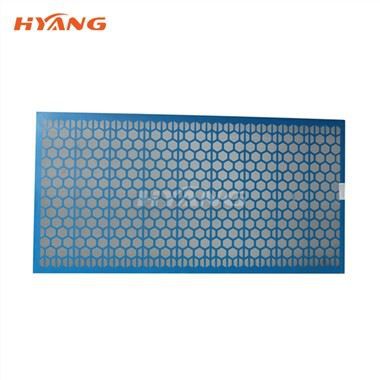
Shaker Screen
What Is Shaker Screen
Shaker screens are constructed with a hooked edge profile on wire cloth or wire mesh panel. They provide an essential function in the sizing, sifting, and grading process in various industries such as minerals, sand, and agriculture. Shaker screens work by vibrating the material to be screened. The vibration causes the material to move across the surface of the screen, separating one medium from another. This includes sizing larger items from smaller ones or solids control. The larger items are collected on the surface of the screen, while the smaller items pass through and are collected in a separate container. A shaker screen is typically made up of several layers of mesh or wire cloth arranged in a series of decks, with each deck having a progressively finer mesh size.
Advantages of Shaker Screen
Improved processing and material quality
While certain screening equipment is better suited for different materials, vibratory screens offer a number of advantages in aggregate and mining materials processing. Shaker screens are particularly well-equipped to meet the fineness requirements of these industries. Their design, which is able to generate the force required to separate oversized particles from fines, results in easier recovery of product – even when handling a material that requires significantly smaller size separation. This leads to both higher yields and an overall improved quality of the final product.
Lower operational costs
Shaker screens are known for their robust design. Because the operating principle is relatively simple, and the design of modern machines is streamlined, the screens can generally be purchased for less than other types of screeners. This results in a lower upfront investment.
Less maintenance and downtime
Maintenance and downtime as a result of repairs or equipment failures can lead to a major loss in both productivity and profit. Many types of screens undergo significant wear and tear, particularly in demanding applications like aggregate processing. However, vibratory screeners offer the advantage of less maintenance and downtime. This is a result of their design, which centers around delivering vibratory forces only to the screening surface.
Higher screening efficiency
While there is a wide range of screening equipment available on the market, shaker screen machines offer an ideal choice when an operation requires a simple solution that can handle a higher feed flow. In fact, they work most efficiently with a consistently higher flow rate. For other types of screening equipment, the same material throughput could lead to screen blinding or a backflow of materials that requires a slower feed.